A complete medical guide to Azithromycin: uses, dosage, benefits, side effects, interactions, comparisons, and pricing.
Azithromycin (Zithromax) is a broad‑spectrum macrolide antibiotic widely used in modern clinical practice for the treatment of bacterial infections affecting the respiratory tract, skin, soft tissues, urogenital system, and gastrointestinal tract. Due to its long half‑life, high tissue penetration, and convenient once‑daily dosing, Azithromycin has become one of the most prescribed antibiotics worldwide.
Clinically, Azithromycin is used for bronchitis, pneumonia, sinusitis, pharyngitis, tonsillitis, otitis media, cellulitis, erysipelas, sexually transmitted infections such as chlamydia, and traveler’s diarrhea caused by susceptible pathogens. Its broad antimicrobial spectrum includes Gram‑positive bacteria, Gram‑negative bacteria, and atypical pathogens such as Mycoplasma, Chlamydophila, and Legionella.
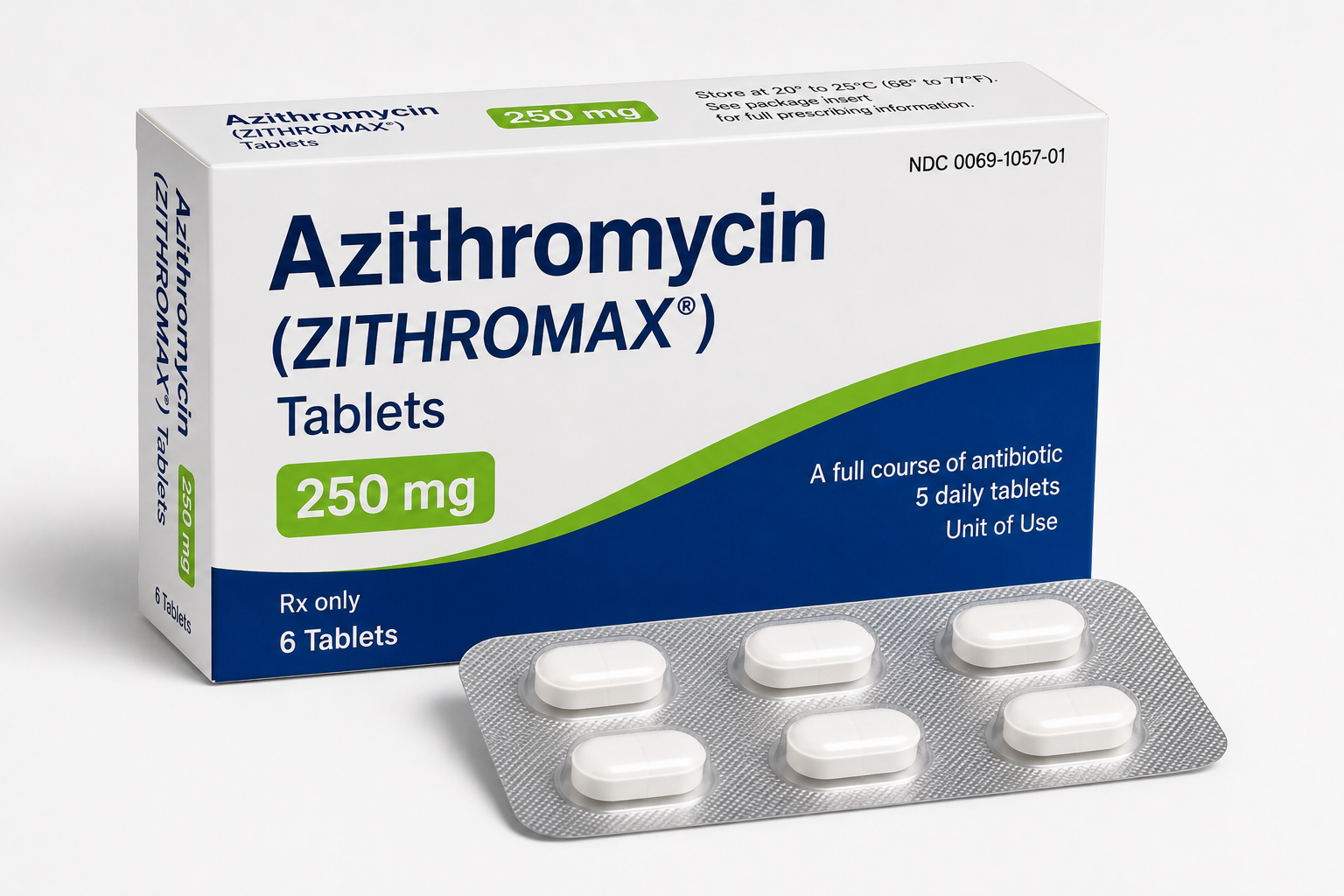
Azithromycin is a macrolide antibiotic belonging to the azalide subclass. It works by binding to the 50S ribosomal subunit of susceptible bacteria, inhibiting protein synthesis and preventing bacterial growth. This mechanism makes Azithromycin effective against a wide range of respiratory, dermatological, and urogenital pathogens.
Azithromycin is known for its long intracellular half‑life, allowing short treatment regimens such as the popular “Z‑Pak” (5‑day therapy). It accumulates in tissues and immune cells, delivering high local concentrations directly to the site of infection.
Rapid onset due to high tissue penetration and long intracellular retention, allowing quick symptom relief.
Most infections respond to 3–5 day regimens, improving adherence and clinical outcomes.
Effective against respiratory, dermatological, gastrointestinal, and urogenital pathogens including atypicals.
Azithromycin inhibits bacterial protein synthesis by binding to the 23S rRNA of the 50S ribosomal subunit. This prevents the translocation step of peptide elongation, effectively stopping bacterial replication. Although primarily bacteriostatic, Azithromycin becomes bactericidal at higher concentrations due to its strong tissue accumulation.
Its antimicrobial spectrum includes Streptococcus pneumoniae, Haemophilus influenzae, Moraxella catarrhalis, Staphylococcus aureus (non‑MRSA), Chlamydia trachomatis, Mycoplasma pneumoniae, Ureaplasma urealyticum, and various Gram‑negative enteric pathogens.
| Strength | Form | Use |
|---|---|---|
| 250 mg | Tablet | Respiratory infections |
| 500 mg | Tablet | STIs, severe infections |
| 1 g | Powder | Single‑dose STI therapy |
Azithromycin is frequently compared with other antibiotics due to its broad spectrum, long half‑life, and unique activity against atypical pathogens.
Spectrum: Amoxicillin covers typical respiratory bacteria; Azithromycin covers both typical and atypical pathogens.
Use cases: Amoxicillin is first‑line for otitis and sinusitis; Azithromycin is preferred for atypical pneumonia and penicillin‑allergic patients.
When Azithromycin is better: Chlamydia, Mycoplasma, Legionella, penicillin allergy.
Spectrum: Both cover atypicals; Doxycycline is broader for STIs.
Use cases: Azithromycin is preferred for pregnancy; Doxycycline for acne and tick‑borne infections.
When Azithromycin is better: Pregnancy, intolerance to tetracyclines, single‑dose STI therapy.
Pharmacokinetics: Azithromycin has a longer half‑life and fewer interactions.
Use cases: Clarithromycin is used for H. pylori; Azithromycin for respiratory and STI infections.
When Azithromycin is better: Fewer drug interactions, shorter courses, better tolerability.
Spectrum: Cefdinir covers typical bacteria; Azithromycin covers atypicals.
Use cases: Cefdinir for sinusitis; Azithromycin for bronchitis and pneumonia.
When Azithromycin is better: Atypical pneumonia, penicillin allergy, STIs.
| Strength ↕ | Form ↕ | Quantity ↕ | Price ↕ |
|---|---|---|---|
| 250 mg | Tablet | 6 tablets | $29.00 |
| 250 mg | Tablet | 12 tablets | $49.00 |
| 500 mg | Tablet | 3 tablets | $39.00 |
| 500 mg | Tablet | 6 tablets | $69.00 |
| 1 g | Powder | 1 dose | $59.00 |